The King Who Chose the Alms Bowl: Why the Buddha Refused to Preach from a Throne
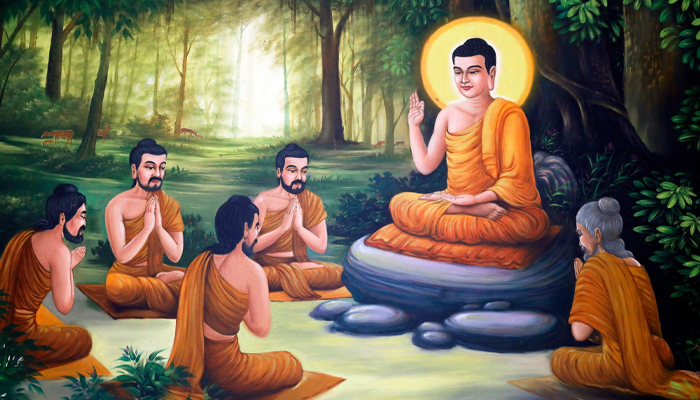
It is a question that has echoed through the centuries, asked by historians, seekers, and once, by a young monk who happened to be the Buddha’s own son.
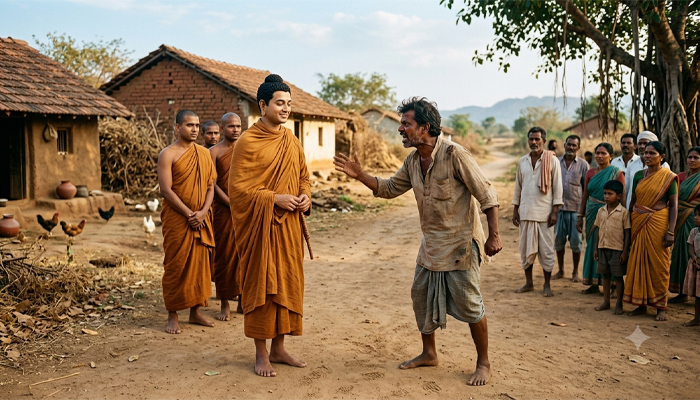
On a quiet evening in the monastery, Rahula approached his father, Gautama Buddha, with a thought that had been weighing on his mind. “Father,” Rahula asked, “You were born a prince, destined to be a great ruler. Couldn’t you have achieved your spiritual goals and spread Dhamma while remaining a king? With the power and reach of a kingdom, wouldn’t it have been easier to guide the world?”
The Buddha did not answer immediately. Instead, he smiled gently, letting the question rest in the quiet evening air.
The Hidden Ingredient
After a moment of reflection, the Buddha looked at Rahula and said, “Today, let our regular monastery cook take a day of rest. I want you to prepare the evening meal for all the bhikkhus (monks) instead.”
Rahula was surprised by the sudden request, but he obeyed. He went into the kitchen, gathered the ingredients, and carefully prepared the meal with deep devotion.
Later that evening, the monks gathered to eat. As they finished their food, a murmur of appreciation rippled through the assembly. Several monks remarked, “There was something truly special and unique about the food today. The flavors felt different, filled with an extraordinary care.”
Seeing the response, the Buddha called Rahula forward.
“The regular cook makes delicious food every day,” the Buddha explained to his son. “But today, because you stepped out of your usual role and poured your heart into it in secret, everyone noticed a distinct sweetness. They tasted something special because it came from an unexpected place of pure intent, not from routine duty.”
Why Truth Cannot Be Decreed
The Buddha then tied the experience back to Rahula’s original question about kingship.
If Siddhartha Gautama had remained on the throne and used his royal authority to propagate his teachings, the Dhamma would have been viewed very differently. When a king speaks, his words carry the weight of the crown. People obey out of duty, fear, or a desire to please the ruler. A religion state-enforced by a king often feels like a personal opinion or a law imposed upon the public.
The Lesson: By renouncing his kingdom, his wealth, and his royal status, the Buddha stripped away all external authority. When he spoke, he did not speak as a ruler commanding subjects, but as a hollow bamboo through which pure truth could flow.
People listened to the Buddha not because they had to, but because they recognized a profound, unique wisdom in his words—just like the monks recognized the unique flavor in Rahula’s cooking. They were drawn to the truth of the message, completely unclouded by the power of a throne.
Hearing this perfect analogy, Rahula bowed his head, his doubts entirely cleared. He understood that the greatest power does not come from ruling over people, but from touching their hearts through absolute selflessness.